Metal Roofing for Southern Maine Homes
Standing seam, corrugated or metal shingles. Whatever fits your house, we put it over the right underlayment so it stands up to nor'easters, heavy snow, salt air and August sun for decades.
Which Kind of Metal Roof Fits Your House?
"Metal roof" can mean several very different things. Here are the four main types, what each one is and where it fits best. At your estimate we'll go over the trade-offs for your particular roof.
Standing Seam Metal
If you want a roof you can stop thinking about, this is usually the one. Standing seam panels run from the ridge down to the eave and lock together along a raised rib, so the screws holding the roof down sit under the metal instead of going through it. With no exposed screws, there are far fewer places for water to sneak in. A well-installed standing seam system commonly lasts 50 years or more.
Corrugated Metal
You've seen it on barns, boathouses and potato houses all over Maine: the classic wavy panel, screwed straight down to the roof. It costs less than standing seam, it's tough, and more and more homeowners are choosing it for the farmhouse look. It comes in plenty of colors, not just bare galvanized.
Metal Shingles & Tiles
Love the shingled look of your cape or colonial but tired of reroofing every couple of decades? Metal shingles are pressed to look like asphalt, slate or cedar shake, so the house keeps its traditional face from the street. Underneath, it's steel or aluminum that handles ice, heavy snow, coastal wind and freeze-thaw far better than the material it's imitating.
R-Panel & Exposed Fastener
R-panel is a ribbed, screw-down panel for buildings where function matters most: detached garages, workshops, boat storage and light commercial roofs. It goes on fast and keeps costs down, and if a panel gets damaged, it can be replaced without touching the rest of the roof.
The Part You Never See: High-Temp Underlayment
Underlayment is the waterproof layer laid over the wood roof deck before the panels go on. Once the roof is done, nobody ever sees it again, and that makes it a tempting place to cut corners. Under metal, Pine Tree Roofing & Exteriors uses high-temperature underlayment, which is made specifically to live beneath hot metal.
Here's why that matters. Metal heats up. On a clear July afternoon the underside of a dark panel gets much hotter than the air, and regular felt or basic synthetic underlayment isn't built to bake like that summer after summer. It can dry out, crack and quit shedding water, even while the panels on top still look brand new.
High-temp underlayment handles that heat, stays flexible through a Maine January, and gives you a second waterproof layer if sideways nor'easter rain or snowmelt ever gets past a seam. It's the backup you hope never gets tested.
A metal roof is meant to last for decades. The layer under it should be able to keep up.
Why Metal Makes Sense in Maine
Picture one year on a Maine roof. A nor'easter buries it in heavy snow, the sun melts a little, and it all refreezes overnight, again and again until April. Along the coast, salty wind blows in off the water, and summer brings thunderstorms. Asphalt shingles can take that for a while, usually 20 to 30 years, and then they're done. A properly installed metal roof often lasts 40 to 70 years, and for many families it's the last roof the house will need.
Snow acts differently on metal, too. It slides off a smooth panel sooner than off a gritty shingle, which means less weight on the rafters and less snow sitting around to melt and refreeze at the eaves. If you've battled ice dams every winter, that alone is a big deal. Just plan for where the snow lands. We'll talk with you about snow guards above doors, decks and walkways.
Get a Free EstimateWhat You Get With Metal
- Lifespan: most metal roofs last 40 to 70 years, about two to three times as long as asphalt shingles
- Snow slides off smooth metal sooner, so there's less weight on the rafters and less chance of an ice dam
- Typically lighter than asphalt shingles, which is easier on older framing
- Fire resistant: most metal roof systems carry a Class A fire rating
- Reflects summer sun, which can ease the load on a heat pump or air conditioner
- Often made with recycled metal and recyclable again at the end of its life
- A real selling point if you ever list the house
- Dozens of colors, from charcoal to deep forest green
Pick a Color You'll Like for Decades
Metal doesn't have to mean shiny silver. Charcoal and matte black look sharp on a cape or a colonial, forest green and barn red suit a connected farmhouse, and slate blue fits right in near the water. Exact colors vary by manufacturer and panel, so ask to see real metal samples when we come out for your estimate.
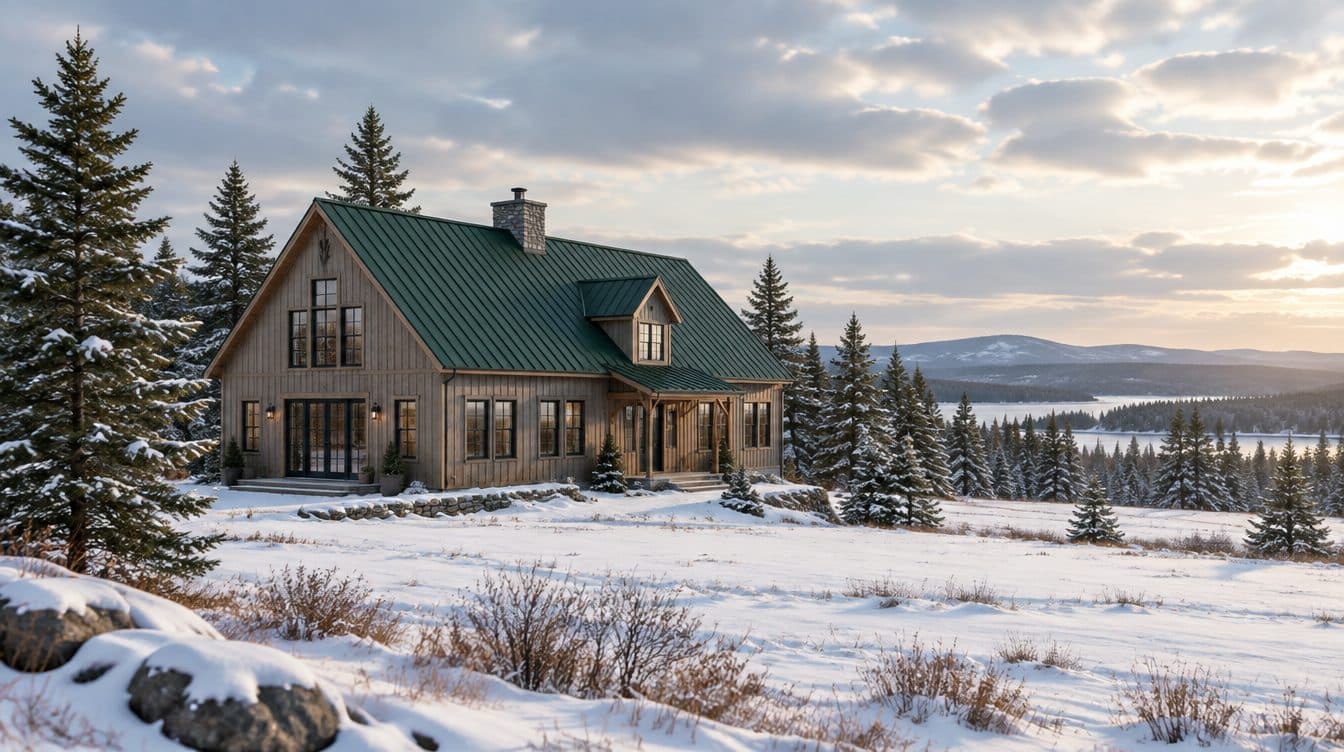
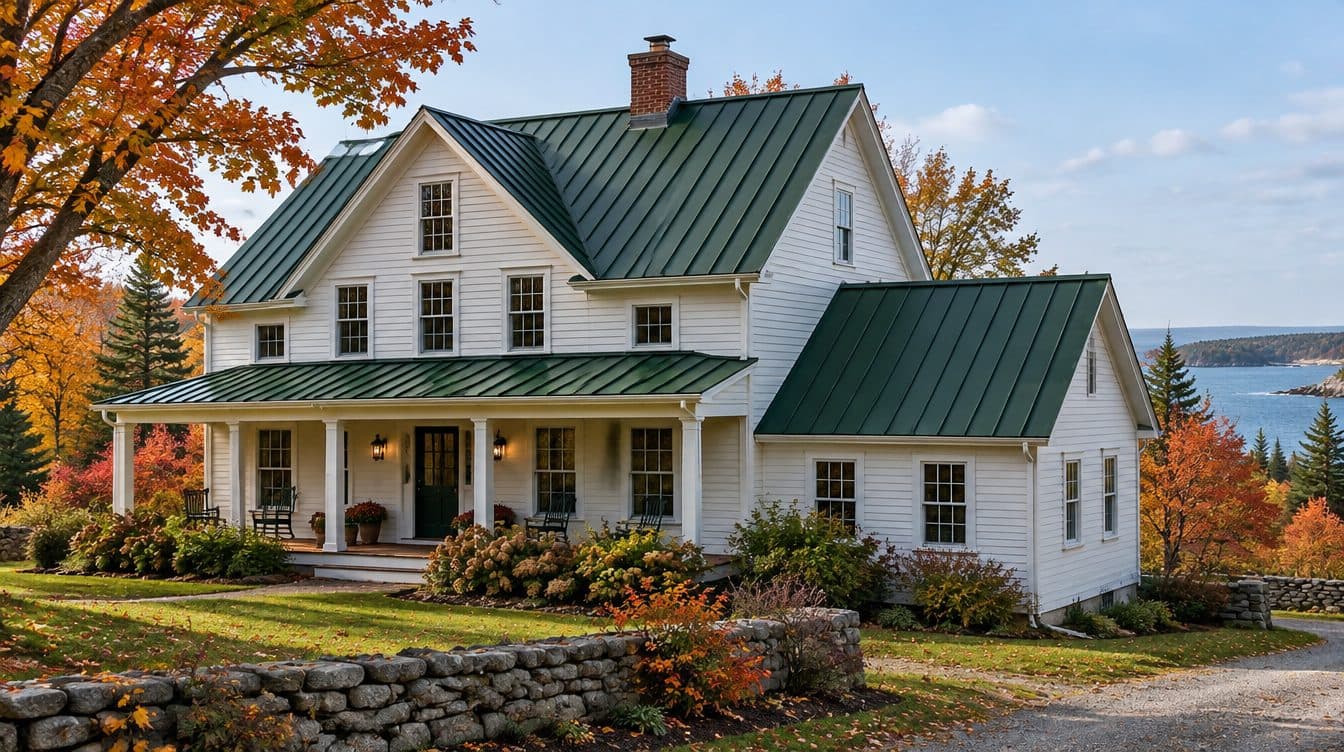 Sample imageStanding seam metal roof
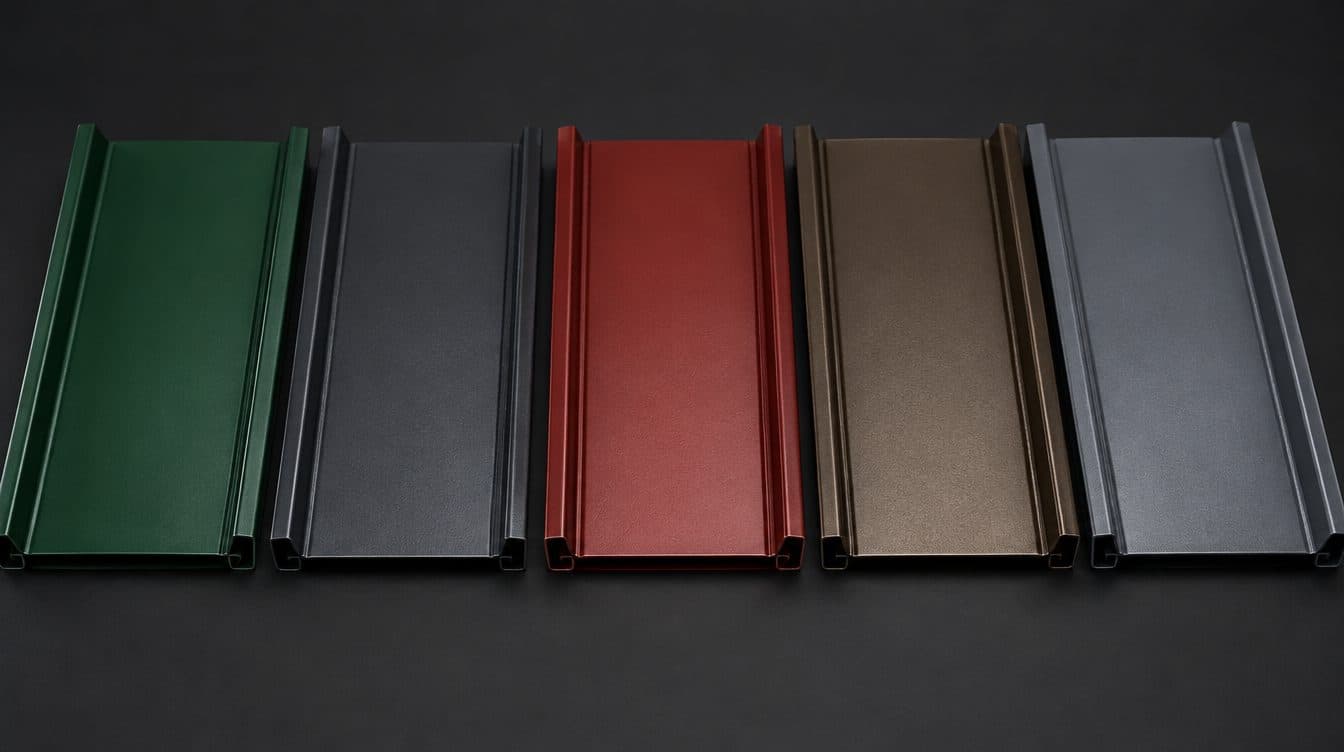 Sample imageMetal roof color sample
Metal Roofing Questions We Hear a Lot
How long does a metal roof last in Maine?
Most metal roofs last somewhere from 40 to 70 years, depending on the panel style and the metal. Standing seam steel and aluminum often go past 50 years with very little maintenance. An asphalt shingle roof in our climate, by comparison, usually lasts 20 to 30 years.
Is a metal roof loud when it rains?
Usually not. The drumming people picture comes from barns and sheds, where the metal sits on open framing with nothing underneath. On a house, the panels go over solid decking and underlayment, with insulation in the attic below. Those layers absorb the sound, and most homeowners say their metal roof is no louder than the shingles it replaced.
Can metal go right over my old shingles?
Sometimes. If there's only one layer of shingles and the wood deck under it is solid, metal can often be installed on top, which saves the cost and mess of a tear-off. We check the deck and framing first. If we find soft spots, rot or trapped moisture, we'll recommend stripping the roof so the metal goes down on sound wood.
What's the difference between standing seam and corrugated?
Mostly the screws. Standing seam panels lock together at a raised rib with the fasteners hidden underneath, so nothing punctures the roof surface. Corrugated panels are screwed right through the face, which costs less but leaves exposed screws and rubber washers you'll want to check over the years. Both hold up well in Maine. Budget, the look you're after and the type of building usually make the call.
Does a metal roof hold up near the ocean?
It can, with the right choices. Salt spray is hard on bare or scratched steel, so homes right on the water often do best with aluminum panels or steel with a high-quality coating, plus stainless or coated fasteners. We'll talk through how close you are to the shore and what that means for the panel you pick.
Thinking About Making This Your Last Roof?
We'll come out, measure, check the deck and the attic, and leave you a written estimate for a metal roof on your house. Bring every question you have about panels, colors and snow guards. The visit is free.
Other Services
Roof Repair & Replacement
Residential and emergency roof repair across southern Maine.
Gutters
Seamless gutter installation, repair and gutter guards.
Siding Installation
Vinyl, cedar shake, HardiePlank, and fiber cement siding.
Metal Roof Coating
Elastomeric coating systems that restore and protect metal roofs.
Ice Dam Removal
Professional ice dam removal and prevention systems.
Storm Damage Repair
Emergency storm, wind, and hail damage response.
Commercial Roofing
Maintenance contracts and flat roof systems.
Property Managers
Pre-winter roof walks and written reports for every building.