
Storm Damage Roof Repair
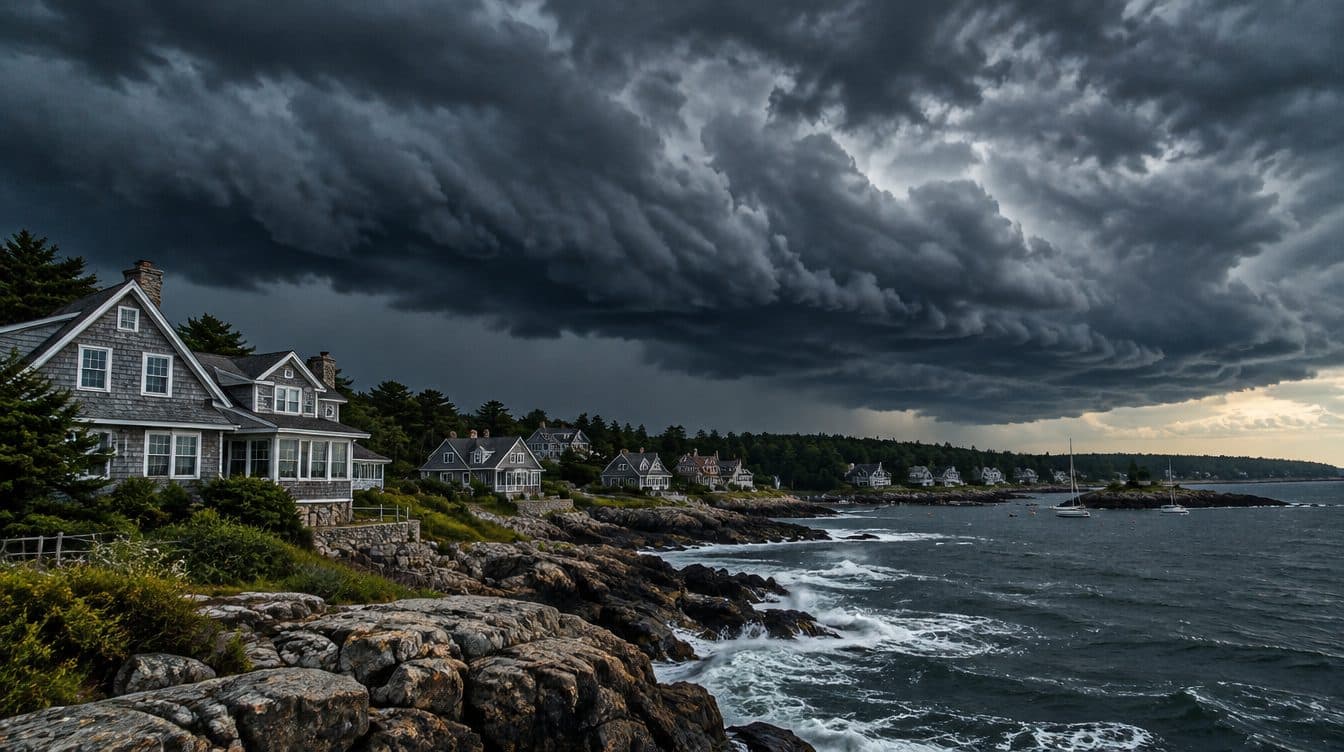
The nor'easter finally blew out to sea, and now there are shingles on the lawn or a branch on the roof. We cover the opening, photograph everything for your insurer, and put the roof back together.
First, Stop the Water
Maine weather doesn't do anything halfway. Nor'easters come in off the Gulf of Maine with sideways rain and gusts that peel shingles along the coast, ice storms coat everything inland, and a wet spring snow can bring a whole white pine down onto a house. Once the roof is open, water starts finding its way inside, and every hour it stays open means more soaked insulation and more drywall to replace.
That's why our first job is closing the roof back up. We tarp the damaged section to keep the weather out, then walk the whole roof to see how far the damage really goes. You get photos and a written scope of work, which is simply a list of what needs to be fixed, ready to pass along to your insurance company.
What Happens After You Call
You Call
Tell us what you can see from the ground, and please stay off the roof. We'll get someone headed your way.
Tarp & Secure
We tarp the damaged area so the next round of rain or snowmelt stays outside.
Document & Assess
Dated photos and written notes covering everything the storm did, for you and your insurer.
Repair & Restore
We fix or replace whatever was damaged and leave the roof sealed up for the next storm.
Storm Damage We Fix
Wind Damage
Shingles creased, lifted or torn off, flashing (the metal strips that seal joints around chimneys and walls) bent back, and bare underlayment left exposed. Common on the coast after a nor'easter.
Hail Damage
Cracked or bruised shingles, dented metal, and bare spots where the protective granules got knocked loose. It rarely shows from the driveway, so it's worth a closer look after a summer storm.
Fallen Trees & Limbs
Maine has a lot of tall pines and oaks close to houses. When one comes down, we seal the roof first, then rebuild the broken decking and framing underneath.
Ice Storm Damage
Gutters torn off by the weight of ice, damaged eaves and trim, and the ice dams that usually show up right after.
Heavy Snow Load
A heavy March snow weighs far more than January powder. Watch for a dip in the roofline, fresh ceiling cracks, or interior doors that start sticking.
Water Intrusion
A leak from any of the above. We follow the water back to where it's actually getting in and seal it there.
Help With the Insurance Side
Nobody wants to sort out an insurance claim while there's a tarp on the roof. We can't file or negotiate a claim for you, but we can take a lot of the work off your plate: detailed photos, a written repair scope and, if you want, one of our people at the house when the adjuster comes so they can see exactly what we found.
Report Storm DamageWill my homeowner's insurance pay for storm damage to the roof?
A lot of homeowner's policies cover sudden damage from wind, hail or a falling tree, but every policy is different, and some coastal Maine policies carry a separate wind or named-storm deductible. Your agent can tell you what yours says. Our part is the evidence: dated photos plus a written description of the damage and the repair it calls for.
How quickly can you come out after a storm?
Call (207) 731-8136 once it's safe to, and we'll get someone out to cover the roof as soon as we can. When a big nor'easter hits the whole coast at once, houses with water actively coming inside go to the front of the line.
Other Services
Roof Repair & Replacement
Residential and emergency roof repair across southern Maine.
Gutters
Seamless gutter installation, repair and gutter guards.
Siding Installation
Vinyl, cedar shake, HardiePlank, and fiber cement siding.
Metal Roofing
Corrugated, standing seam, and metal shingles installed with high-temp underlayment.
Metal Roof Coating
Elastomeric coating systems that restore and protect metal roofs.
Ice Dam Removal
Professional ice dam removal and prevention systems.
Commercial Roofing
Maintenance contracts and flat roof systems.
Property Managers
Pre-winter roof walks and written reports for every building.